

About AyurAlign
Ancient wisdom, aligned with modern medicine
We make Ayurveda accessible and bring it into conversation with modern medicine, not replace it.
Two traditions, one idea
Modern medicine reads what you are born with and what life has changed since. Ayurveda, a tradition from India thousands of years old, has asked the same two questions all along.
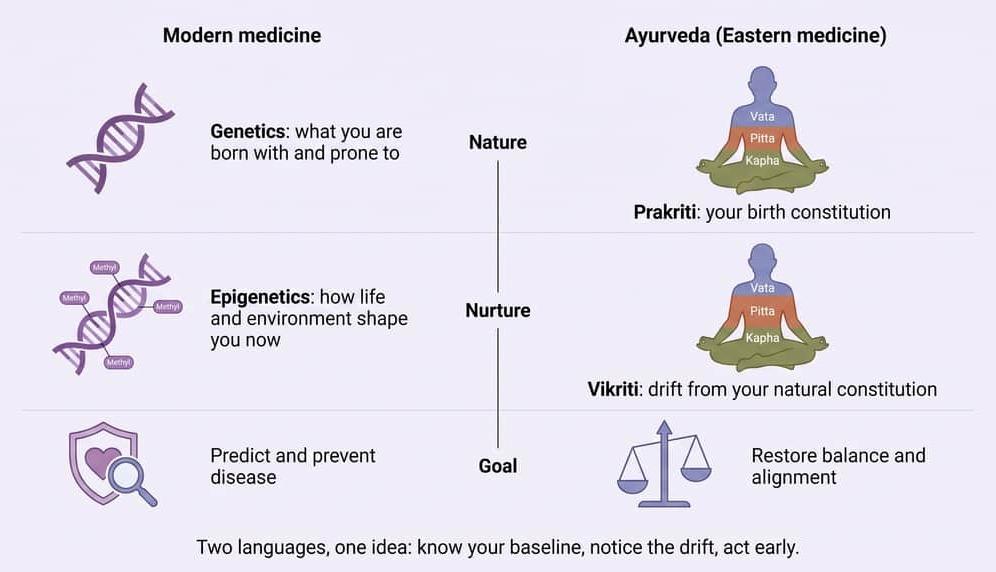
One example: type 2 diabetes
Both traditions see high blood sugar the same way: born prone, but daily life decides.
Modern medicine
Ayurveda
- Prakriti: Kapha and Kapha-Pitta types are over-represented among people with type 2 diabetes,[2] and Kapha-leaning types show more insulin resistance.[3]
- Vikriti: heavy, sweet food and too little movement raise Kapha. Classical texts call the result Prameha, marked by excess urination; its lifestyle form matches type 2 diabetes.[4]
- Back to balance: a lighter, calorie-restricted diet (Apatarpana), less sweet and heavy food, and daily movement.[5] This is the same advice the Charaka Samhita gives any Kapha-dominant person: lightening through fasting and exercise, and less sweet, sour, salty and heavy food.[6]
What if you had known early in life that your nature leans towards diabetes?
The more ways we have to know ourselves, the more we can prevent, rather than live with medication.
- 1. Florez et al. TCF7L2 polymorphisms and progression to diabetes in the Diabetes Prevention Program. N Engl J Med 2006.
- 2. Association of Kaphaja and Kapha-Pittaja Prakriti and MTHFR C677T with type 2 diabetes. AYU 2018.
- 3. Association of constitutional type of Ayurveda with cardiovascular risk factors, inflammatory markers and insulin resistance. J Ayurveda Integr Med 2012.
- 4. Sharma & Chandola. Prameha in Ayurveda: correlation with obesity, metabolic syndrome, and diabetes mellitus, Part 1. J Altern Complement Med 2011.
- 5. Sharma & Chandola. Prameha in Ayurveda, Part 2: management of Prameha. J Altern Complement Med 2011.
- 6. Charaka Samhita, Sutra Sthana 22 (Langhana) and Kapha dosha, Charak Samhita Online.
Early, mostly small studies; an example to explain the idea, not a diagnosis or treatment plan.
Prakriti and Vikriti
Two Sanskrit words: your nature, and how far you have drifted from it lately.
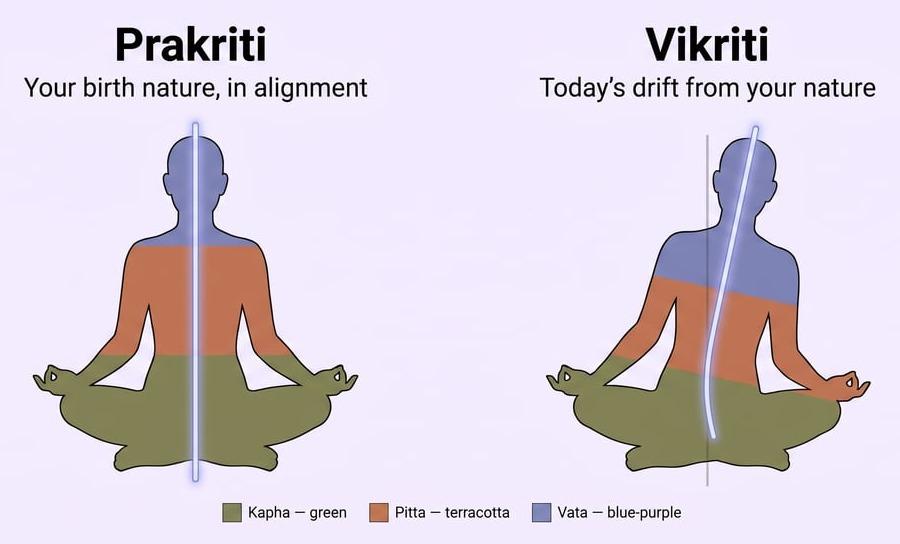
A parallel in thinking, not a claim that Prakriti is written in your genes.
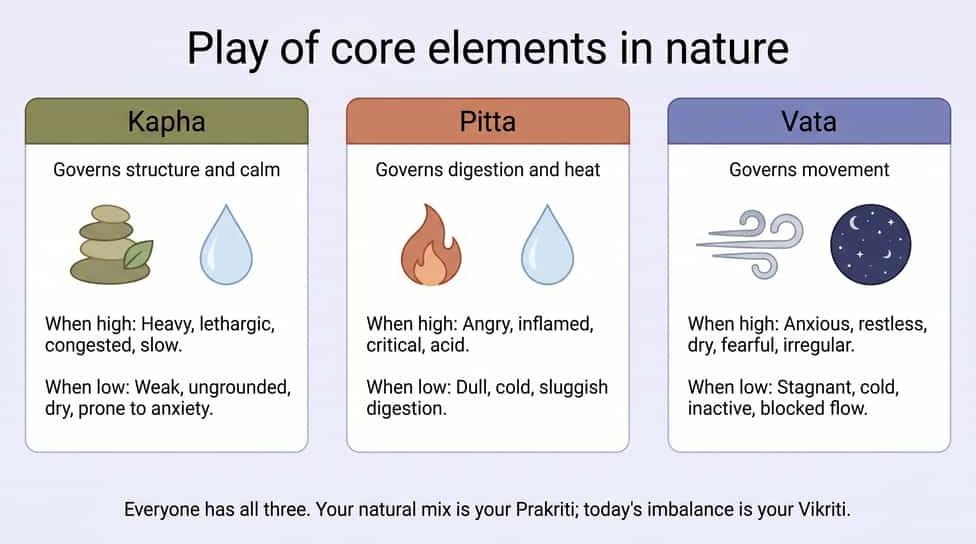
Play of core elements in nature
Your nature is a mix of three doshas, each made of elements.
How AyurAlign listens
Ayurvedic practitioners read the pulse, your routine and the small signs we tend to miss. Early studies suggest some of these reflect what modern tests detect. AyurAlign gathers them in a short assessment, sets your labs beside them, and suggests simple practices to bring you back into alignment.
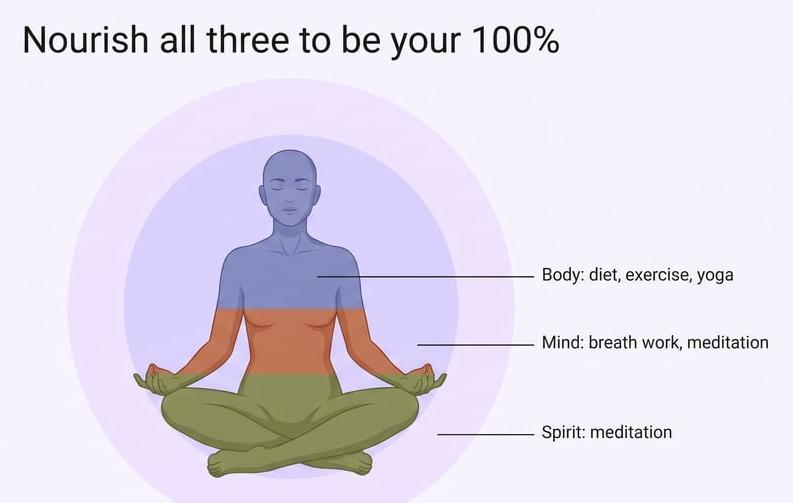
Body, mind and spirit
Nourished on all three levels, you can give your 100% to whatever you set out to do.
What AyurAlign is, and is not
A free assessment, a daily plan, a wellness guide you can ask, and a way to reach qualified practitioners. Not a diagnosis, prescription or emergency service; it works alongside your doctor. How it works · How we keep it safe.
Illustrations created with BioRender.